Buying a roll of Parchment Paper for international markets isn’t just about comparing prices per unit. The right choice can really impact your baking outcomes, packing speed, storage safety, and even how much your customers trust you. You might see a roll online that looks perfect, but once it’s next to a hot oven or stored in a humid warehouse, it could perform totally differently.
In this guide, I’m sharing seven practical tips from a procurement standpoint. We’ll look at aspects like paper grade, coating quality, roll sizes, packaging, communication with suppliers, testing, and overall cost. It’s super important to ask for clear specs, production samples, and consistent documentation before making big orders. Little details actually matter—a core diameter mismatch might cause issues with your machine, uneven winding can slow down your packing line, and weak cartons might arrive crushed after a long haul.
Don’t forget to review the supplier’s experience carefully. Ask how they control coating thickness, moisture resistance, printing info, and batch consistency. While independent test reports can back up the tech claims, it’s always a good idea to see and test samples under real working conditions. Keep in mind, different buyers like home bakers, bakery chains, and foodservice distributors might need different roll widths or specific release properties.
And hey, don’t get caught up in confusing product descriptions! For example, a listing might mention a Tissue Paper roll with 80 pulls per roll, but that’s totally different from parchment paper. Always double-check the material, purpose, sheet count, and roll size in writing. No checklist can cover every detail—I've seen some attractive quotes that hide costly packaging restrictions or unclear delivery terms. Asking the right questions can save you from surprises down the line.
Overall, these tips are designed to help global buyers make smarter, more reliable decisions, even when some supplier info seems incomplete or a bit inconsistent.
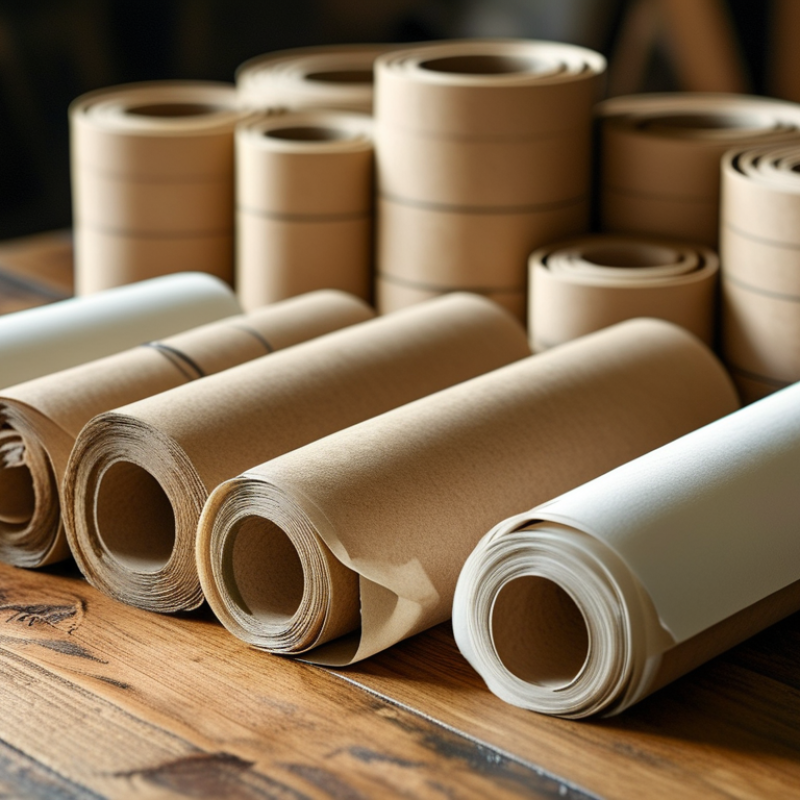
Global buyers should define parchment paper by measurable specifications, not appearance alone. A 40–60 GSM range affects strength, flexibility, and heat response. Lower GSM feels lighter and may suit delicate baking liners. Higher GSM offers better handling for heavier foods. Ask for a GSM tolerance, not only a target number.
Tip: Confirm the usable width after trimming. A 30-centimeter roll may provide less coverage if the edges are uneven. Check roll length in meters, core diameter, and winding direction. These details affect machine loading and warehouse storage. Coating also needs precise wording. Silicone coating can improve release, while a heavier coating may change surface feel and folding performance. Request coating weight, temperature guidance, and food-contact documentation from the supplier.
Tip: Test the paper with your actual trays, ovens, and packing process. Paper that performs well in a sample oven may tear during high-speed converting. Keep a retained sample from every approved batch.
Tip: Compare results after cooling, not only immediately after baking.
Tip: Inspect GSM across several points.
Tip: Confirm width and length by measurement.
Tip: Review moisture resistance for humid routes.
Tip: Avoid choosing the lowest price before checking consistency.
Small differences can create waste. I have seen buyers overlook core size, then discover the rolls cannot fit their equipment. That mistake is easy to prevent, but not always remembered.
Global buyers should treat food-contact compliance as a purchasing requirement, not a paperwork exercise. FDA 21 CFR 176.170 covers paper and paperboard contacting aqueous or fatty foods, while EU Regulation 1935/2004 requires materials to avoid harmful migration. The EU framework also demands traceability through production and distribution. Ask for a Declaration of Compliance, migration test results, and batch-level traceability.
Tip: Request testing under realistic conditions. Check temperature, contact time, food type, silicone treatment, inks, and adhesives. A certificate alone is not enough. I have seen documents list “food grade” without naming the tested substrate. That gap needs attention. For EU sales, also verify good manufacturing practice under Regulation 2023/2006 and any applicable national rules.
Material selection still matters. Eurostat reported 188.7 kilograms of packaging waste per EU resident in 2021, including 82.5 kilograms of paper and cardboard. This pressure makes recyclable, responsibly sourced parchment attractive, but recyclability does not prove food safety. For Napkin Tissue Paper Mother Roll Jumbo Roll sourcing, compare basis weight, grease resistance, roll cleanliness, core material, and odor. Keep retained samples from every lot. Then review supplier test reports against your actual filling line, because laboratory conditions can feel cleaner than production reality.
Heat resistance should guide every parchment paper roll purchase, especially for buyers serving different baking markets.
Many rolls are rated up to 220°C, but that figure is not a universal guarantee. Check the supplier’s tested temperature range, baking duration, and intended contact with food.
A practical test is simple.
Place a sheet beneath cookies, bread, or roasted vegetables at the highest planned temperature. Watch for curling, browning, smoke, or brittle edges. The paper should remain stable and release food cleanly.
Do not confuse temperature resistance with suitability for direct flame, grills, or heating elements. Those uses require separate confirmation.
Thickness also matters.
Thin parchment may work well for short cookie batches, while heavier sheets can support oily pastries or dense dough.
Real ovens are not.
I once focused too much on the 220°C rating and overlooked airflow in a commercial oven. The paper darkened near the fan. That mistake changed my purchasing checklist.
Ask for:
Request samples before placing a large order. Small trials reveal problems that a specification sheet may hide.
Temperature ratings look precise. Real ovens are not.
When I compare parchment paper rolls for international buyers, I start with width and length. Common widths range from 30 to 45 cm, while lengths often span 10 to 100 m.
A 30 cm roll suits small baking trays and compact workstations. Wider 45 cm rolls cover commercial sheets with fewer overlaps. That difference reduces trimming waste, but it may require a larger dispenser.
Measure twice. A 10 m roll is easier to test and store. A 50 m roll supports regular kitchen production without frequent replacement. For high-volume operations, a 100 m roll can lower handling time.
However, longer rolls may sag if the core is weak or the holder lacks proper support. Check the inner core diameter, outer roll diameter, and winding tightness before ordering.
Parchment quality also depends on coating consistency, tear resistance, and heat performance. Ask for technical data, food-contact documentation, and sample rolls before confirming a large shipment.
Packaging should protect edges from crushing during sea or road transport. I once underestimated storage space for wide rolls; the cartons blocked a loading aisle. That mistake changed my buying checklist.
A holder such as the Tissue Paper Roll Holder Frist Roll Tissue Holder may not fit every parchment core, so verify dimensions rather than trusting product photos.
Compare usable length, not only the printed roll size. Supplier communication matters too, especially when measurements, tolerances, and carton counts cross languages.
When buying a Parchment Paper Jumbo Roll, inspect silicone release quality before comparing price. A smooth surface does not always mean reliable coverage. Visual checks are useful, but they can mislead.
Hold the roll under angled light. Look for dull patches, streaks, pinholes, or visible coating breaks. These defects may cause food to stick during baking. Check both sides when the product specification requires dual-sided release. Small gaps matter.
Ask for coating coverage data and test samples. Measure coating weight across the web, including both edges and the center. Uneven readings may indicate poor application control. A simple rub test is only a screening tool. It cannot replace controlled release testing.
During routine roll inspections, I have seen glossy sheets fail after heating. The coating looked even but released poorly from sticky dough. That result taught me to test the actual application, not only the appearance. Use identical dough, temperature, and contact time for comparison. Record release force when laboratory equipment is available. Also inspect the first and last layers, where winding pressure can change surface performance.
Storage deserves attention. Moisture, heat, and dust can affect the coating before conversion. Ask about packaging, production dates, and recommended storage conditions. One detail is often missed: uneven coating may become more obvious after slitting. Request slit samples when possible. A perfect-looking sample may still hide process variation. I would leave room for retesting.
Compare anonymous parchment paper roll samples using two practical silicone-coating indicators: coating coverage and coating evenness. Higher percentages indicate more complete and uniform release performance.
Buying guidance: prioritize rolls with coverage close to 100% and evenness above 95%. Large gaps between the two measures may indicate pinholes, streaks, edge variation, or inconsistent silicone application.
A parchment paper roll should be priced by usable square metre, not by roll count. Measure width, length, basis weight, and expected trim loss. For example, a 0.4-metre-wide, 1,000-metre roll provides 400 m². A 3% handling loss reduces usable yield to 388 m². If the roll costs 180 dollars, its effective material cost is 0.46 dollars per usable m². Yield matters.
Build landed cost with a clear worksheet: product price, export packing, inland transport, ocean freight, insurance, import duty, broker fees, and local delivery. A 100-roll order therefore provides 38,800 usable m². If freight and insurance total 2,400 dollars, logistics add 0.062 dollars per m². An 8% duty on a 18,000-dollar customs value adds 1,440 dollars, or 0.037 dollars per m². The estimated landed cost becomes about 0.56 dollars per usable m², before storage and financing. Freight hurts.
Check the tariff classification with the customs authority, because duty rates depend on coating, weight, and intended use. UN Comtrade trade records help compare import values, but they may combine different paper grades. Recent container-price data from Drewry’s World Container Index also shows how quickly freight assumptions can change during disruptions. Request at least two freight quotations and price scenarios. A low MOQ may reduce inventory risk, yet it can raise the per-roll freight allocation. I would also challenge the 3% loss assumption; converting, moisture, and damaged cores can make it optimistic.
Practical purchasing framework using an illustrative 40 gsm parchment paper roll specification. All monetary values are in USD; duty rates, freight, taxes, and local charges must be confirmed for the actual destination country and customs classification.
| No. | Buying Tip | Data Dimension | Illustrative Real-World Input | Calculation or Benchmark | Purchasing Action |
|---|---|---|---|---|---|
| 1 | Compare yield per m², not price per roll | Roll width × roll length; paper yield | Roll size: 0.40 m × 20 m Net yield: 8.00 m² per roll Basis weight: 40 gsm | Yield = 0.40 × 20 = 8.00 m² Paper weight = 8.00 × 40 g = 320 g per roll | Request width, length, basis weight, and usable yield on the quotation. Exclude unusable edge material from comparisons. |
| 2 | Convert the quoted roll price into a cost per m² | Unit price ÷ usable yield | Option A: $2.65 per roll; 0.40 m × 20 m Option B: $2.45 per roll; 0.40 m × 20 m | Option A: $2.65 ÷ 8.00 = $0.331/m² Option B: $2.45 ÷ 8.00 = $0.306/m² | Use the same basis for all suppliers. A lower roll price is not automatically lower when roll dimensions differ. |
| 3 | Check MOQ against your annual consumption | Minimum order quantity; total delivered area | MOQ: 500 rolls Yield: 8.00 m² per roll Planned annual demand: 4,000 m² | MOQ yield = 500 × 8.00 = 4,000 m² If demand is 4,000 m²/year, MOQ equals approximately one year of inventory before safety stock. | Confirm whether MOQ is per size, color, coating, or shipment. Avoid excess inventory caused by a mixed-SKU MOQ. |
| 4 | Calculate freight per m² using shipment volume | Pallet quantity, cubic volume, ocean freight, local charges | 500 rolls on 10 pallets Approximate shipment volume: 8.0 m³ Ocean freight: $90/m³ Origin and destination charges: $280 Inland delivery: $450 | Ocean freight = 8.0 × $90 = $720 Total logistics cost = $720 + $280 + $450 = $1,450 Freight and logistics per m² = $1,450 ÷ 4,000 = $0.363/m² | Ask for packed dimensions, gross weight, pallet count, Incoterm, and whether destination handling is included. |
| 5 | Apply import duty to the correct customs value | Customs basis; duty rate; taxes excluded | Goods value: 500 × $2.45 = $1,225 International freight used in CIF example: $720 Illustrative import duty rate: 8% | CIF customs value = $1,225 + $720 = $1,945 Import duty = $1,945 × 8% = $155.60 VAT/GST is excluded because it may be recoverable or calculated differently. | Confirm the destination tariff code, preferential origin rules, customs valuation method, and whether duty applies to freight. |
| 6 | Include packaging loss and quality tolerance | Usable yield adjustment; moisture, edge, and winding loss | Nominal order yield: 4,000 m² Planning loss allowance: 2% Expected usable yield: 98% of nominal quantity | Usable yield = 4,000 × 98% = 3,920 m² Effective goods cost = $1,225 ÷ 3,920 = $0.313/m² | Agree on width tolerance, length tolerance, core size, roll hardness, splice limits, and inspection criteria before production. |
| 7 | Calculate the complete landed cost before selecting the supplier | Goods + freight + local charges + duty, divided by usable m² | Goods: $1,225 Ocean freight: $720 Origin/destination charges: $280 Inland delivery: $450 Import duty: $155.60 Usable yield: 3,920 m² | Landed cost = $1,225 + $720 + $280 + $450 + $155.60 = $2,830.60 Effective landed cost = $2,830.60 ÷ 3,920 = $0.722/m² Formula: (Goods + Freight + Local Charges + Duty) ÷ Usable Yield | Compare quotations on the same delivery basis, currency, shipment size, duty assumption, and usable-area calculation. |
Planning note: The example assumes a 0.40 m × 20 m roll, 500-roll MOQ, 40 gsm paper, 2% usable-yield loss, $90/m³ ocean freight, and an 8% illustrative duty rate. VAT/GST, brokerage, storage, demurrage, inspection fees, and financing costs are not included in the landed-cost example.
Parchment Paper Roll purchasing begins with supplier evidence, not attractive samples. Check the ISO 9001 certificate number, issuing body, scope, and expiry date. The ISO Survey has reported more than 1.2 million ISO 9001 certificates worldwide. Yet certification alone proves a management system, not perfect paper. Confirm that the certified site actually manufactures your specified roll.
Request a COA for every production batch. Key fields should include basis weight, thickness, roll width, tensile strength, moisture, and grease resistance. Match the COA with your purchase specification. A missing test method is a warning sign. Ask for laboratory equipment details and authorized approval. The parchment paper industry also needs careful food-contact documentation, because coating chemistry and process conditions can affect performance. Do not accept generic declarations.
Batch traceability should connect the raw material lot, coating date, machine line, operator checks, and final roll numbers. ISO 22005 provides useful principles for traceability systems. Use a sampling plan based on ISO 2859-1, then inspect outer packaging, splice quality, winding tension, odor, and release behavior. Keep sealed samples for comparison. Small samples can mislead. I would repeat testing across several batches, especially when the supplier is new. A practical audit may still miss seasonal variation, transport damage, or inconsistent inner cores. Record those uncertainties instead of hiding them.
: Common options range from 40 to 60 GSM. Lower GSM feels lighter and suits delicate liners. Higher GSM handles heavier foods better. Request an acceptable GSM tolerance, not one target number.
Typical widths range from 30 to 45 centimeters. Lengths often range from 10 to 100 meters. A 30-centimeter roll suits smaller trays. A 45-centimeter roll reduces overlaps on larger sheets.
Printed width may not equal usable width. Uneven edges can reduce coverage. Measure several points after trimming. Small differences can increase waste.
Check the inner core diameter and outer roll diameter. Confirm winding direction and winding tightness. A weak core may sag on longer rolls. I once overlooked core size. The rolls did not fit the holder.
Ask for coating type, coating weight, and temperature guidance. Coating can improve food release. Heavy coating may change folding performance. Request suitable food-contact documentation.
Test samples with actual trays, ovens, and packing equipment. Check tearing during high-speed handling. Compare performance immediately after baking and after cooling. Sample testing is useful, but never perfect.
Request a certificate of analysis for every production batch. It should include GSM, thickness, width, moisture, and strength. Ask for test methods and laboratory details. Generic documents may leave important gaps.
Link raw material lots to coating dates and final roll numbers. Inspect several batches, not only one sample. Check splices, odor, winding tension, packaging, and release behavior. Seasonal variation may still be missed. Record uncertainty honestly.
Choosing the right Parchment Paper Roll requires more than comparing prices. Global buyers should first define the product by grammage, typically 40–60 GSM, along with roll width, length, and coating type. Food-contact compliance must be verified through appropriate documentation, including FDA 21 CFR and EU 1935/2004 requirements where applicable. Heat resistance should match the intended baking process, with many applications requiring performance up to approximately 220°C. Buyers should also compare practical roll formats, such as widths of 30–45 cm and lengths from 10–100 m, to ensure convenient use and efficient storage.
Coating quality is equally important. Check that the silicone release layer is evenly distributed and provides reliable non-stick performance without weak or uncovered areas. To assess the true purchase cost, calculate landed cost based on usable yield per square meter, minimum order quantity, freight, and import duties. Finally, audit suppliers through ISO 9001 certification, certificates of analysis, batch traceability, and pre-shipment samples. A structured evaluation process helps reduce quality risks, control total costs, and secure consistent supply for international baking operations.